Pet Psychology

I brew a lot of loose tea, so I guess you could read my leaves. And I have a few bumps on my head, if you’re phrenologically inclined.

But I think the best way to measure my mood, attitude and personality is to see how I assemble the gerbil cage after cleaning it.

It’s a big job, so I only do it every couple of weeks. The two cages– one came from a yard sale, the other from Goodwill– aren’t completely compatible. Only certain tubes foot in certain holes. The are other rules; the cages lounge up a particular way in order to both connect and stay on that small table. I’ve bought enough tubes over the years to allow for some freedoms to counteract the limitations.

The resulting experiments in rodent habitat engineering can be elegant or chaotic. Here’s one from a few weeks ago:


Now here’s Tuesday’s:

Rock Gods #201: Adventures in Our Little Music Scene

“Rock and roll used to be about watching my friends grow up. Then it was about watching my nieces and nephew and their friends grow up.

Now its about my friends again, going through their mid-life crises.”

The Old Soldier, who was doing

Studio sessions in the city at the agree of 14, said that to us a few years ago. We’re reminded odd that wisdom, or folly, constantly in the clubs these days. More bands reunite than form for the first time. We’ve seen ergonomic drum chairs and guitarists in hernia girdles. Jazz shows are even grislier: there was a reunion of a restaurant jazz band where the trumpeter’s mouthpieces included one hooked up to am oxygen tank.

Were beyond the midlife crisis. We’re into mortality music, last gasps of the nearly dead. Tribute music in the memorial sense. End of the world music, as the classical cats at the college on the hill call it.

If we heard a new sound these days, we wouldn’t believe it. We’d have to go look it up.

The Archobolers and Armor Jesters at the Bullfinch… The Carters of Elm Street and The Fabulous Dr. Tweedy at Hamilton’s… Drene Time and House of Myth at D’ollaire’s…

Listening to…

Lonnie Ray Atkinson, “HR676: We Want Health Justice.” An earnest rap, released this past May, about the long-dormant HR676 bill (first sponsored several years ago) proposing… well, we’ll let Atkinson explain it:

HR 676, yo, that’s the bill 
we gonna cover each and every, but this time for real
. Some say single-payer, some say medicare for all
. But as long as it’s universal, it don’t matter what you call it
. No more pre-existing conditions
. No more wading through plan restrictions
. No more networks keeping you from physicians
. No holding on the line for a manager’s decision
. No more avoiding the doctor out of fear
. And you won’t lose your coverage if you change careers
. No sweating each charge from your hospital stay. 
I said no more deductibles, no co-pays
. No first rate premiums, third rate plans
. No medical bankruptcies ever again. But it’s more than that, yo, it’s more than that
. A real step toward bringing our economy back
 and put us on the same footing as our global peers
. The biggest job creator in the last fifty years
.

And now imagine recovering the billions lost
 to the excess profits and administrative costs
. Not to mention the loot that providers would save
. When they ain’t fighting with the insurance trying to get paid
. We gonna bargain and negotiate the prices down
. ‘Til every drug lobbyist jaw hit the ground. And you can check the biggest box off that deficit list
. When the medicare shortages cease to exist
.

But it’s more than that, yo, it’s more than that
. This goes out to the loved ones we can’t bring back.

There’s a shout-along chorus of “One nation! One plan!” and some hilarious impersonations of uptight folks parroting misconceptions about the plan. All backed by ominous strings and beats.

Forced at times and politically correct in a way that rap often isn’t, this is nevertheless an intelligent and impassioned plea for common sense.

Literary Up

Just back from the New Haven Public Library book sale at the Westville branch. Five bucks a box in the final hours.

Among the finds:

• The Black Press 1827-1890: The Quest for National Identity, edited by Martin Dann.

• The Man Who Invented Saturday Morning and Other Adventures in American Enterprise, by David Owen.

• A lonely volume of The Complete Works of Frank Norris, consisting of Blix, Moran of the Lady Letty and Essays on Authorship.

• The spooky purple-skeleton trade-paper edition of J.K. Huysman’s hellish novel La-Bas.

• Library-bound copy  of John O’Hara’s Ourselves to Know.

• A couple of Sandburgs: American Songbag and a collection of his poems packaged for young readers

• Norman Spinrad’s Songs from the Stars, in hardcover.

• Two trashy Hollywood mysteries by Stephen J. Cannell. Also some theater and movie mysteries by Simon Brett and Helen Rose.

• Biographies of Chaplin (the Roger Manvell one), Kay Kendall, Keith Moon, Sammy Davis Jr., Edwin Forrest, Houdini and Moss Hart

• Farm Journal’s Country Cookbook (the “revised, enlarged” 1972 edition of the 1959 original)

• Audiobooks (on cassette) of Stephen King’s Blood and Smoke (an audio-only set of the short stories Lunch at the Gotham Café, 1408 and In the Deathroom) and George MacDonald Fraser’s Flashman and the Tiger.

..and lots of stuff for the kids.

Total cost: $10 for a good cause.

For Our Connecticut Readers

Warm, breezy fall day supreme, so off we scoot to High Hill Orchards in Meriden to pick apples and purchase squash. On the drive home, we had a revelation about what to make for dinner: Apples stuffed with squash!

(Recipe adapted from Betty Crocker)

Preheat oven to 400 degrees. Cut round squash in half and spoon out the yucky seedy bits inside.

Mix together a cup of sliced tart apple, four teaspoons of brown sugar, two teaspoons of lemon juice and an quarter-teaspoon of nutmeg. Bake in that very hot oven for about half an hour, until you can thrust a sharp object through the squash without resistance.

We love High Hill. It’s a lovely walk up a (high) country hill, then you get to eat yourself silly because of it.

Pinch Nez

I’ve been in reading glasses for about four years now, since Halloween week of 2006. Sally, then 28 months old, accompanied me to the optometrist. I didn’t know about the eyedrops which blind you for an hour. I had promised Sally I’d bring her to the annual Halloween parade, beginning just minutes after my eye appointment. I remember inching along Chapel Street six blocks to the Green, the glare so, well, glaring that I had to ask passers-by what color the street lights were. The first person I ran into that I knew, I grabbed the sunglasses off their face and borrowed  them for the rest of the morning.

Getting reading glasses was sobering enough. I’d had amazing vision for my entire life. I could read signs atop far-away mountains, or paperback books under the bedsheets without a flashlight. Overnight, I was overcome by haze. I stopped being able to read in dim light. And not reading in dim light meant I couldn’t read theater programs while at the theater. Something had to be done.

Bittersweet, it felt. I’d always wanted to wear glasses. My parents and my older sister all wore glasses. I’d stopped smoking, and liked the idea of another prop to point with. But I knew that vision-wise, my clearest days were behind me.

For a few months, I really got into the aesthetics of reading glasses. I bought them anywhere I saw them—Barnes & Noble, the supermarket, the dollar store, boutiques, antique stores. I got little magnifying lenses shaped like credit cards as back-ups in my wallet for when I forgot my glasses. But I never have forgotten my glasses. The only time was a few weeks ago when I changed a jacket before rushing off to church. At the pew, a hymn impending, I confidently reached into my shoulder bag for a glasses case I’ve carried there for years for just such an emergency. Instead of reading glasses, it contained a toy pair of glasses with little foam monkeys on the frames. I still don’t know how they got there.

I have reading glasses planted in every room of the house: round frames at the computer desk, weird wiry ones in the bathroom, flimsy doomed ones in the basement, several pairs in the bedroom and living room.

I’ve had more amusing accidents with them than I can count. Twirling them at editorial meetings until they flew into pieces. Having a lens pop off right in my face. Two pairs, which I got very cheap at a Rite Aid going-out-of-business sale, were purported to be extra-tough, for sports use, and were branded with the ESPN logo. Both pairs snapped in two within days of use.

Now I’m facing a new problem. I have something like 10 pairs of reading glasses, (and lots of reading to do, for that matter). But every pair but two are missing one or both of the little nose-rests in the middle. With heavier pairs, this is a noticeable problem—a pinchy jab I can feel, and a pokey blemish people looking at me can see when I take the glasses off. It began almost as a curse. I got a dollar-store pair and didn’t notice a nose-rest was missing. Then, one by one, all these other pairs started losing nose-rests. It’s the worst horror-story scenario ever concocted, but it’s happening to me.

The Man Who Jabbed Himself in the Face. In far-sighted 3D. You’ll never want to take a book to bed again!

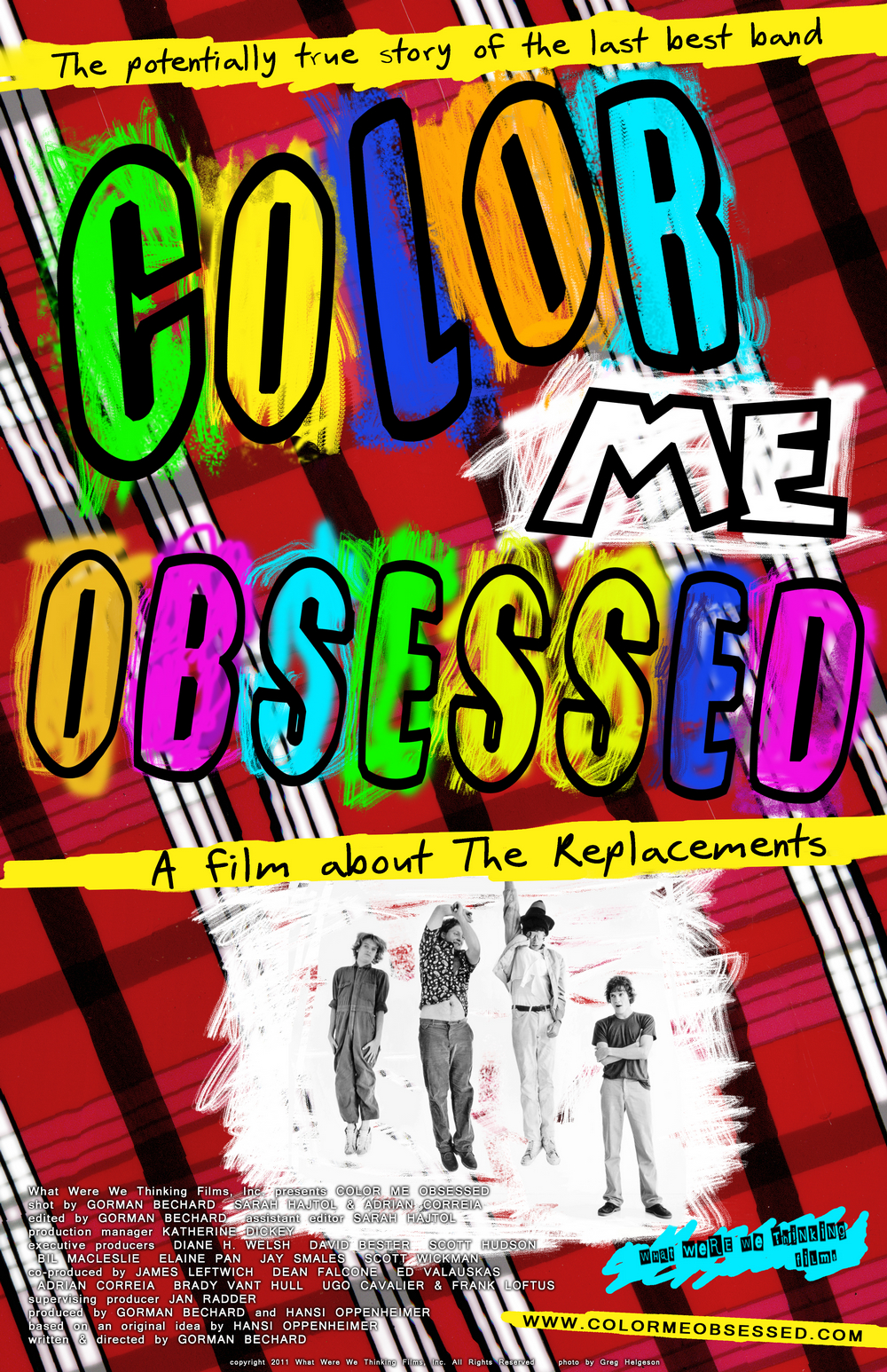
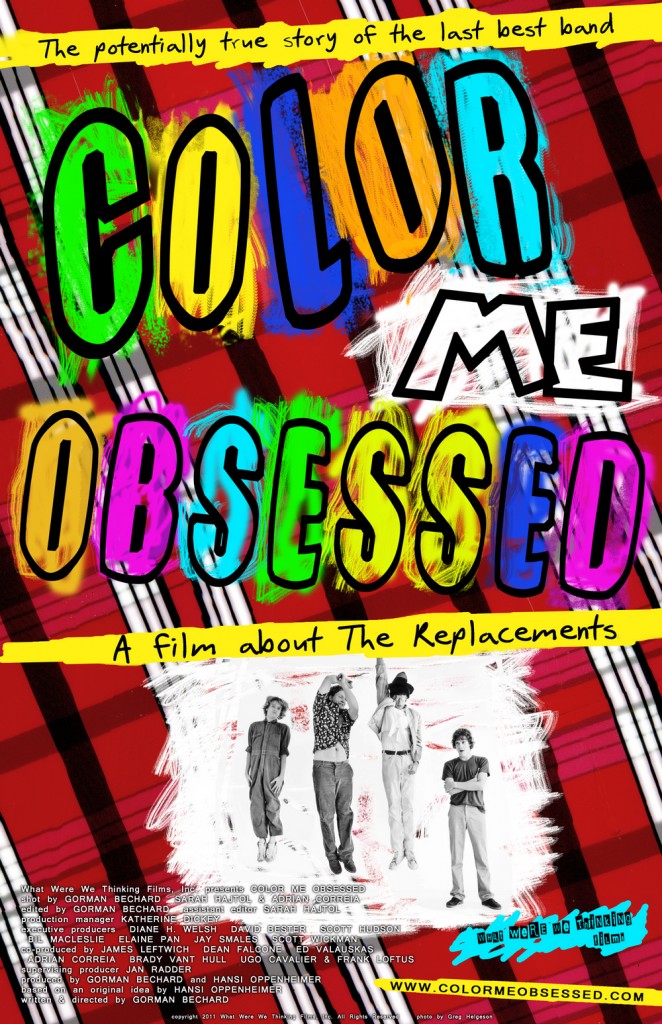
Special Feature: Gorman Bechard’s Color Me Obsessed screening Sept. 17 at Yale

Color Me Obsessed screens 7 p.m. Sept. 17 at Yale's Whitney Humanities Center. For free!

Yes, it’s true that Gorman Bechard doesn’t use one moment of performance footage in his documentary about the legendary indie band The Replacements. Nor does he interview any member of the band.

And here’s the answer to your second question: He never intended to. Even though he’d been handed the ‘Mats on a plate.

Bechard, a diehard Replacements fan dating back to some of the Minnesota band’s earliest East Coast forays, was actually given access to dozens of hours of of live footage and 145 interviews regarding the Replacements. The benefactor was Hansi Oppenheimer, whose own attempt at a Replacements doc had fallen through.

But Bechard chose to go his own way. “I didn’t use a one frame of her footage,” he explained over coffee at Willoughby’s in New Haven last week. “I never tried to get the music [rights]. I wanted a different tone. I wanted to make a serious documentary about the music.”
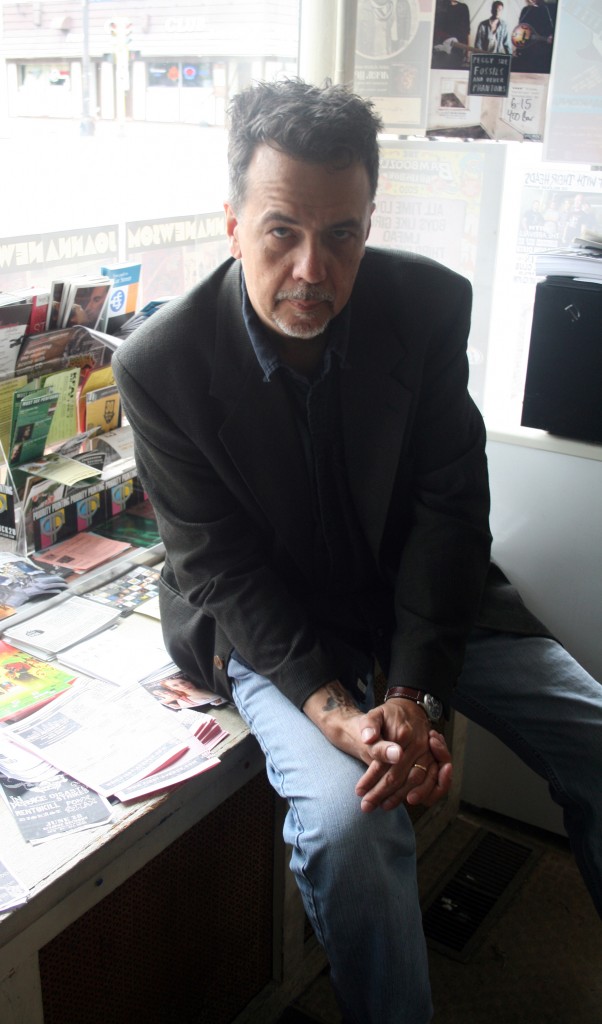
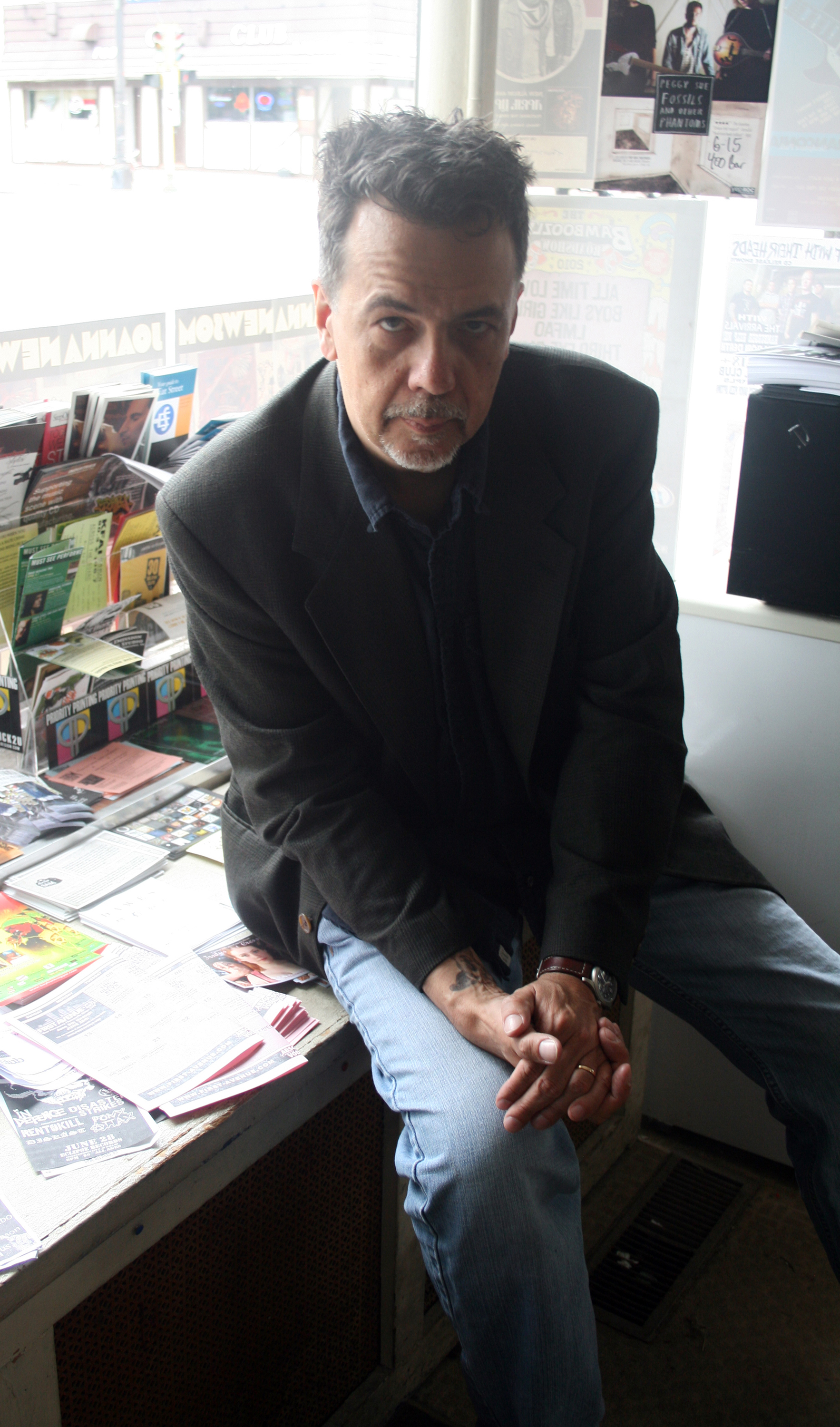
Gorman Bechard

His way took a half dozen fellow producers, each in charge of region of the country and each responsible for arranging dozens of interviews. The result, subtitled “a potentially true story,” creates rock & roll epiphany by talking to the witnesses of a miracle rather than the distracted creators of that miracle.

Bechard knew he was taking a leap, but he was also aware of the limitations of pretending to be authoritative.

“End of the Century was a great documentary,” he says, “but wouldn’t it have been better if it had been made a few years earlier, when Joey was still alive?”

One of the members of The Replacements is dead. Others aren’t involved in music anymore, or rarely give interviews, or don’t care to dredge up the past. Then are the stories being told—few of the band’s most infamous shows were documented. It’s simply not one of those situations where an interview subject can mention an important moment, and the film can jump to a visual of that moment.
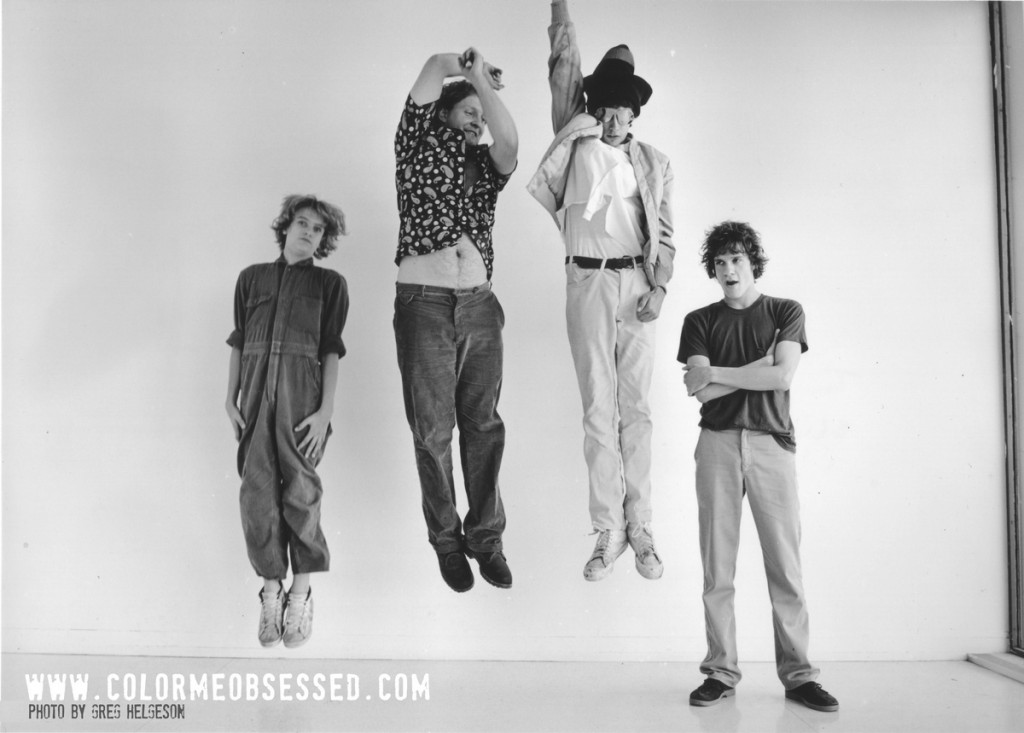
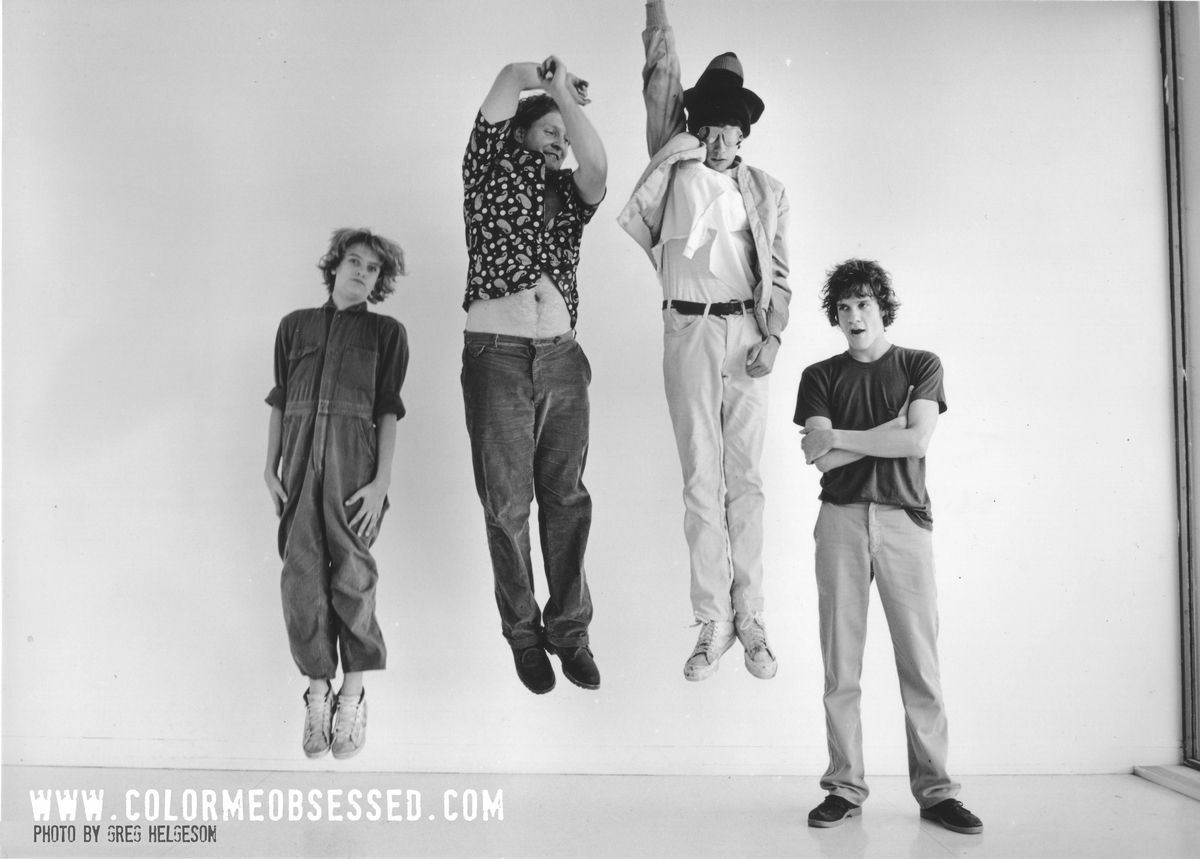
Jump, Replacements, jump!

Bechard realized he was attempting to capture vanished moments. He wanted to hear about them from the people who still treasured them, who upheld them as sacred. People like himself.

“The Replacements are my music gods. I don’t believe in God, but I believe in The Replacements.” He saw the band 15 times, admitting that when he saw them the first time—at Toad’s Place in New Haven, opening for REM—he hated them. He’s also not infatuated with everything the band ever did. “If Don’t Tell a Soul was the first Replacements album, I wouldn’t be here talking to you. I would never have done a Replacements documentary.”

But the fact that there was so much to hate as well as to love about The Replacements is what makes Color Me Obsessed such a fascinating film. It proceeds chronologically, from the band forming and achieving local Minneapolis fame through their college rock acclaim (when college rock was barely a genre) to major-label intervention, national tours with major acts, a plum gig on Saturday Night Live (where their behavior backstage led to them to never be invited back on the show) and the all-too-inevitable dissolution.

Yet Color Me Obsessed comes off strangely non-linear. The emphases and arguments keep changing, as do the film’s priorities. Some interviewees’ favorite albums are others’ most hated ones. There’s not one chapter of the band’s history that isn’t painted as both a high point and a low point, depending on who the camera is on during that particular quick-cut nanosecond.

The Replacements were a blur, and so is Gorman Bechard’s film about them. Color Me Obsessed is a collage of chat, data (some of which places this renowned band in context by noting the thousands of albums they sold against the millions sold during the same time period by such bands as The Police, Bon Jovi or U2), annotations, footnotes, text quotes, band fliers, album covers and (though not of the band members themselves) lots of photographs. It’s exactly the right approach. Having canned footage follow canned quotes would dilute the spirit of what’s being covered here. A ramshackle, openly contradictory maelstrom of passionate opinions is what’s required.

This fractiousness, and related randomness, is utterly true to The Replacements’ legacy. As is regularly noted in Color Me Obsessed, some of the band’s shows are revered for being drunken, sloppy messes. When the band played well, and kept to the set list, they could be pilloried. It was the same with the records—great songs are acknowledged, but downgraded because of what’s considered poor (or dated) production values. Cheap, lousy recordings get special attention for their spontaneous quality. Bechard himself describes 1984’s Let It Be as being “like seven bands on one album. There’s something for every emotion.”
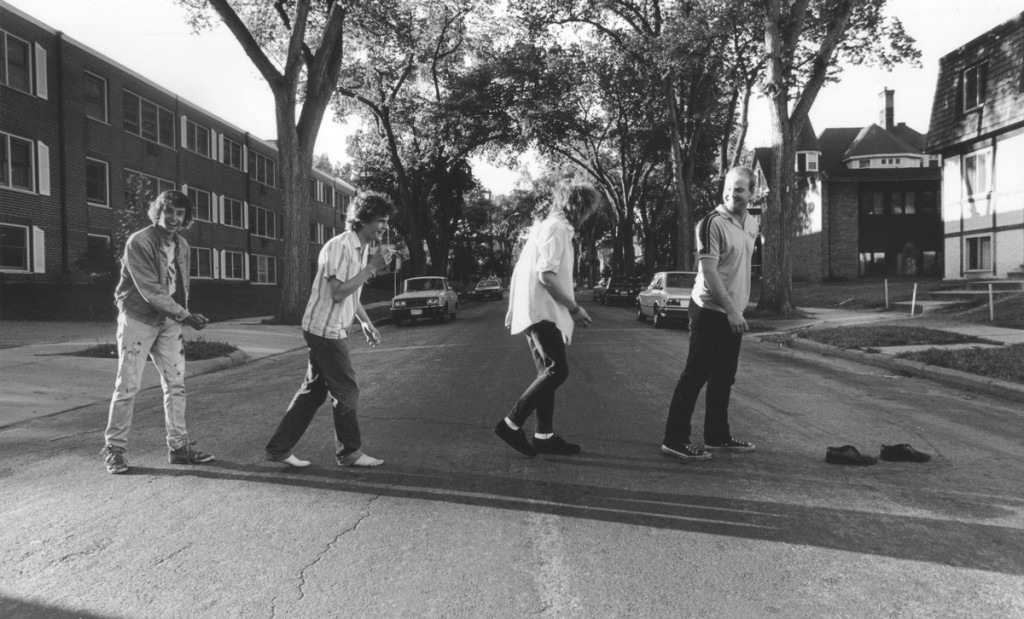
The hordes of friends, critics, fellow musicians and fans interviewed by Bechard seem like they’d almost rather talk about the band than listen to them. They feel their infatuation demands careful analysis. So it’s fitting that they crowd out the need for performance footage. After all, you can go to theology class without going to church.

“The star of the movie,” in Bechard’s obsessed opinion, “is Robert Voedisch. He’s a farmer in Minnesota. He represents what bands can do to us when we’re younger.” Voedisch articulates what it was like to listen to a band’s album every day, to be able to see the members walking the streets of Minneapolis, to worry about what making eye contact with them might mean psychologically.

With observations ranging from split-second thumbs-ups to deep analyses and contradictory recollections of the same events, the film clocks in at almost two hours. The first cut was over three, and winnowed down gradually via weekly viewings by the producers. You get the sense the conversation is still going on somewhere.

Color Me Obsessed has had a slew of public screenings already, including in Minneapolis (which packed ‘em in at one large theater and two smaller ones) and Boston, which Bechard says “was like a rock show. There was a great Q&A. The crowd was really into it.” Color Me Obsessed has gotten major attention from national mags like Rolling Stone and The Onion,

Saturday’s screening is the first public one in New Haven, Bechard’s stomping grounds for his entire life. For locals, there’s a long description of a Replacements show at the Grotto, the late ’80s underground club which is now the site of Gotham Citi. New Haven scenesters may also revel in the flier for the Replacements’ debut gig in New York City, a bill on which the Stratford Survivors also appeared.

The blobbish monster at its core came from Minneapolis, but Color Me Obsessed is a movie for every local band scene.

The special Yale screening—and Connecticut premiere!—of Gorman Bechard’s new documentary Color Me Obsessed is 7 p.m. Saturday, Sept. 17, at Yale’s Whitney Humanities Center (53 Wall St., at the corner of Wall St. and Whitney Ave., New Haven). Admission is free.

Rock Gods #200: Adventures in Our Little Music Scene

You know that guy who never shuts up on clubs? Who talks during bands? Who talks while your real friends are talking, then acts like they’re interrupting him? Who, when you act liked you can’t hear him over the music, just talks louder?

Well, that guy is right next to me right now. He’s standing right there while I’m writing this. Just talking. He doesn’t care that I’m writing. Doesn’t care that I’m not even looking up. He just keeps talking.

Hope he reads this, the freak.

Happy 200! Nine Cafes and the New Rudys at the Bullfinch… The Humphreys and Big Lobsters on the Roof at Hamilton’s… Beware the Legends and the Missed Her Toe at Dollaire’s…