Wilde Bird Under Glass

“In matters of grave importance, style, not sincerity, is the vital thing.”

—Gwendolen, in Act III of The Importance of Being Importance


As when they put rope barriers around Stonehenge (also in the news these days), the tombstone of Oscar Wilde is now off limits for close-up spiritual healing. No more kissing the dandy’s tomb, folks!

Oscar got off better than other dead-artist pilgrimage meccas. James Dean’s tombstone got stolen in 1983, found a month later, then stolen again five months after that, then replaced with a new stone—which got stolen (and swiftly recovered) 15 years later.

The most-kissed tomb in Pere Lachaise cemetery has not been Wilde’s but that of the Brecht-covering, Living Theater-loving, other-side-breaker-on-througher Jim Morrison.

Wilde’s get appreciated from new angles all over the place these days. If you haven’t yet read Alex Ross’ August (and august) New Yorker piece on him here.

Categories: Uncategorized | Leave a comment

John Neville R.I.P.

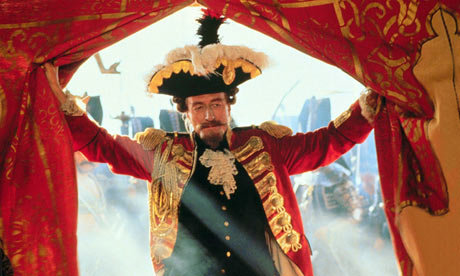
John Neville died this week. Film cultists know him for his Lord Buckley-esque Baron Munchausen in Terry Gilliam’s follow-up to Brazil.

TV cultists know Neville as the manicured man on The X-File (a role he repeated in one of the show’s movie spin-offs).

Canadian summer theater festival cultists know him as the former artistic director of the Stratford Theatre Festival.

And suckers, such as myself, for nationally touring musicals that don’t replicate recent Broadway productions recall him as Henry Higgins in the 30th anniversary tour of  My Fair Lady. The show played New Haven’s Shubert Theatre in the fall of 1991. The original Broadway production of My Fair Lady had its out-of-town try-outs at the selfsame Shubert in 1956.

The tour was directed and choreographed by Crandall Diehl, though Neville had staged and starred in his own production of the show at Stratford eight years earlier. The cast included Christine Andreas as Eliza, Clive Revill as her father Alfred P. Doolittle, John Valentine as Colonel Pickering and Kevin Dearinger as Freddy. The production was notable for how respectful it was of the original production. Read the libretto sometime and you’ll realize how much cut of the book (and even a few of the songs) regional and community productions routinely chop out of My Fair Lady. Considering that what’s being cut is basically verbatim George Bernard Shaw dialogue from Pygmalion, it’s significant.

As was John Neville, who could sing Higgin’s lines when he felt like it, and brought an air of Shaw himself to his performance. Actors who can really embody the arch attitude of the old British empire are pretty much all gone now. John Neville was one of them.

Categories: Uncategorized | 1 Comment

Brian Dennehy Knows His Krapp: A discussion with the star of Krapp’s Last Tape, opening this week at the Long Wharf Theatre

Long Wharf Theatre reels in Brian Dennehy with Krapp's Last Tape, opening this week and running through Dec. 18. This and other photos here were for taken by Richard Hein for an earlier presentation of this production, at Chicago's Goodman Theater a couple of years ago.

There’s a special thrill in chatting with actors who continually challenge themselves. A lot of well-known stars have theater pieces they can easily bring on tour when their schedules open up. Leslie Nielsen and Henry Fonda were Clarence Darrow. Ethel Barrymore gave The Twelve Pound Look.

Brian Dennehy, by contrast, does Krapp—the wizened recluse pawing through audiotapes in his sparse apartment. It’s one of the most disconcerting yet exhilarating choices an actor could make for a solo show.

Dennehy’s other recent one-man triumph is only slightly chummier: Eugene O’Neill sordid hotel lobby two-hander Hughie; Dennehy played the play’s desolate Erie Smith at Long Wharf three seasons ago, opposite Joe Grifasi as the Night Clerk.

Another actor renowned for his risk-taking stage roles, Al Pacino, starred in Hughie back at the selfsame Long Wharf back in 1996. Dennehy’s follow-up of Krapp’s Last Tape is as audacious a choice as Pacino playing King Herod in Oscar Wilde’s Salome.

When Dennehy was in New Haven with Hughie, he’d already done Krapp’s Last Tape, and he even did the two one-acts as a double-bill at the Stratford Shakespeare Festival in Ontario and at the Goodman Theatre in Chicago.

Last month I chatted on the phone with Dennehy about bringing Krapp’s Last Tape to Long Wharf Stage II. The show starts previews tomorrow, Nov. 29, opens to critics Thursday and runs through Dec. 18.

I didn’t have to dance around the topic of Hughie and Krapp’s being presented three years apart rather than on the same bill. Dennehy talks readily about the plays’ similiarities—“They were both written when their playwrights were 57 years old, and when both playwrights were very successful. The subjects are similar: an aging man down on his luck. Hughie is about Erie Smith looking for someone else to prop him up in his illusions. Beckett is writing about a man and his younger self.

Dennehy appreciates the raucous humor that underlies Krapp’s Last Tape, just as he found the garrulous and bright-eyed side of Willie Loman amid the tragedy of Arthur Miller’s Death of a Salesman, and the upbeat storyteller’s air of Erie Smith in Hughie. “Beckett has a philosophical point which he illustrates by setting up an elaborate comedy routine:
“A man eats a banana.
“He slips.
“He hurts his ass.
“This joke exactly describes life. There’s always a banana peel. This play can be regarded as both slapstick comedy and a profound understanding of what life is. To a great extent, it’s like any circus act. It demands great precision and timing. Samuel Beckett thought Buster Keaton was the perfect Beckettian character—at least until he got to work with him.” Keaton starred in the short Film, written and co-directed by Beckett (abetted by the playwright’s frequent collaborator Alan Schneider), in 1965, and a 1949 Keaton talkie, The Lovable Cheat, is suspected to have inspired the title and plotline of Beckett’s masterpiece Waiting for Godot.

“I fooled around with doing Godot,” Dennehy says. “Everybody puts me in as Pozzo, and that’s not the part I’m especially interested in. I would love to play one of the two leads. I would like to try Endgame sometime too. But [Krapp’s Last Tape] is the one that’s probably most available to audiences. It’s not only human but naturalistic. It’s not naturalistic at first—the banana gag is abstract to a point—but in a way it becomes naturalistic.”
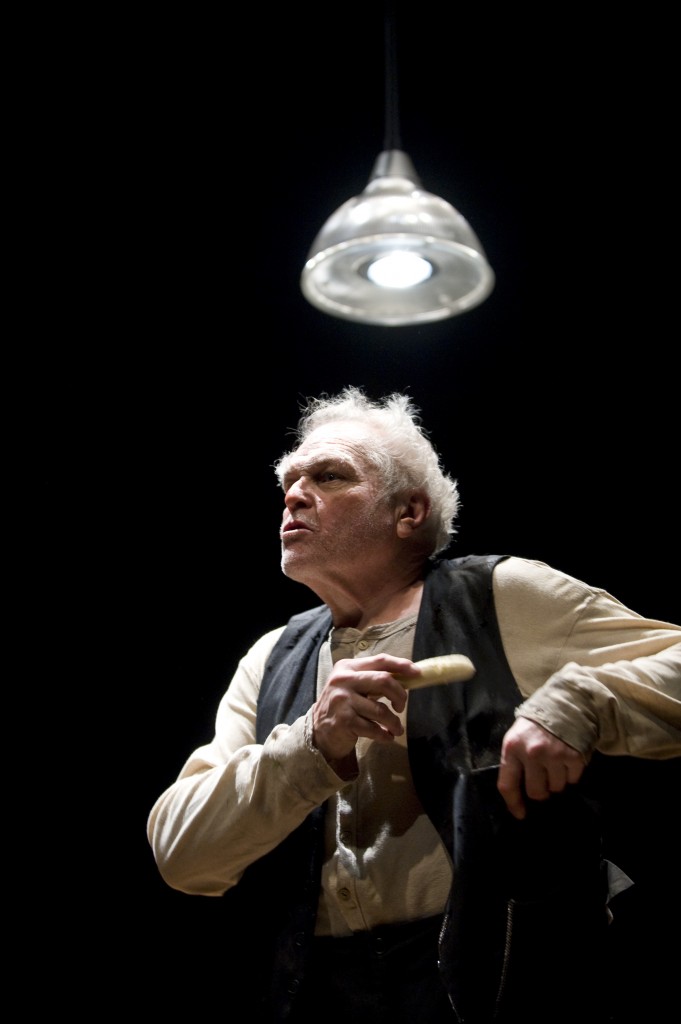
A naturalistic moment from Krapp's Last Tape. Photo by Richard Hein, from the Goodman Theatre production.

Dennehy says he’s “seen many productions” of Krapp’s Last Tape, and “read all the material that can be read.” He’s keen to discuss, debate and justify some of the choices he and director Jennifer Tarver have made for this production. The technology involved for instance. The play concerns a man hoarding and playing recordings of his younger self. When Beckett wrote the play, reel to reel tapes were the medium for that. Later productions used cassettes, and now we’re out of the CD-R age and presumably into phone memos or cloud-based storage systems.

Dennehy notes that Beckett himself, when confronted with an environmental detail in the play that would have skewed its stated “Sometime in the present” setting, simply crossed out “present” in the manuscript and updated the vague phrase to read “Sometime in the future.” For the actor’s purposes, “it’s a tape recorder, not a CD player. Which feels right, but of course it also means you’ve got to deal with the goddamn tape recorder, which is a pain in the ass. The whole deal with arthritic fingers turning the thing on and off. This is what you rehearse.”

The show’s scenic design, Dennehy says, is details but not cluttered. “Some productions load the room with manuscripts, detritus. This is just a room that has walls and a door, which opens into a little kitchen area.”
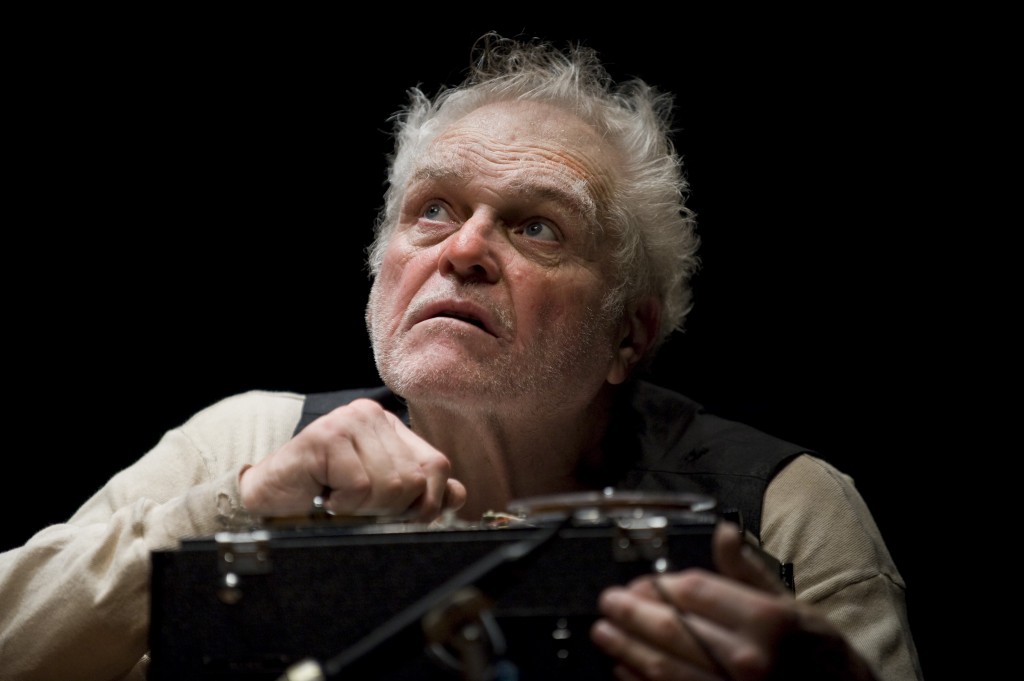
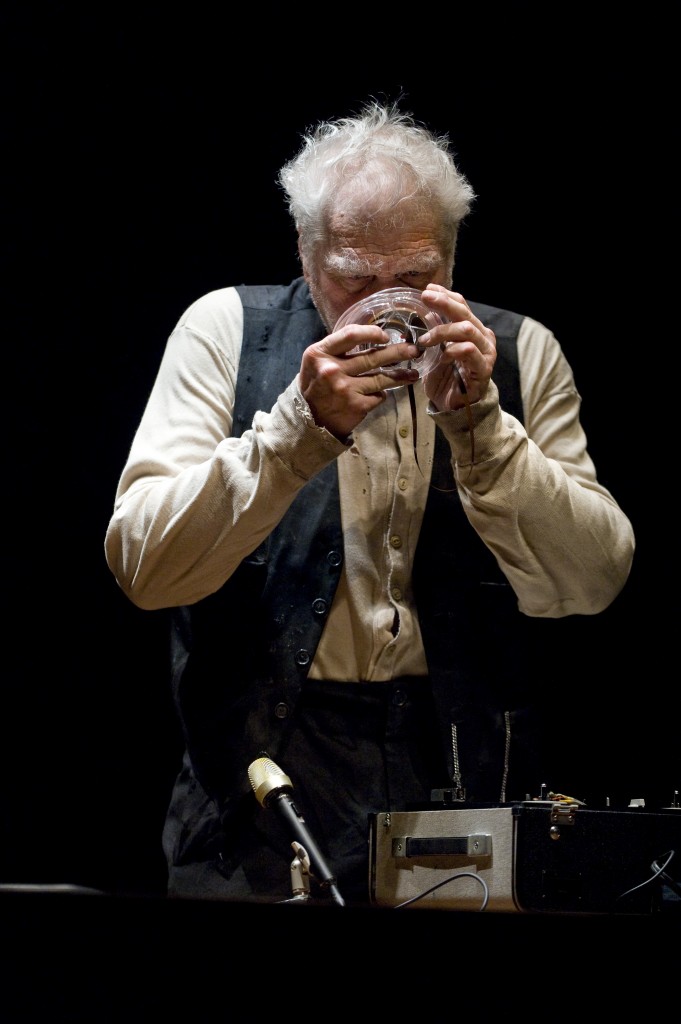
"This is what you have to rehearse." Brian Dennehy as Krapp with tape. Photo by Richard Hein, of the Goodman Theatre production.

Dennehy involvesd himself heavily in the productions he stars in, from doing original dramaturgical research to consulting on design, but he doesn’t see himself jumping into behind-the-scenes roles professionally. “I used to direct a lot. At this stage, I like the acting. Dealing with designers, all that other stuff, can be a pain in the ass.”

He could probably do Krapp’s Last Tape, and Hughie, comfortably on the regional theater circuit as long as he wishes—“with great plays, you never mind doing them again”—but Brian Dennehy’s already moved on to fresh challenges. This past summer he reunited with Krapp’s director Jennifer Tarver at the Stratford Shakespeare Festival to do Harold Pinter’s Homecoming. He describes the 1964 play as “Artaudian in that it’s a deliberate attack on the audience. Pinter did even more provocative things later, but this is his beachhead.” During the same summer festival that he blazed and blustered as Pinter’s insufferable character Max, Dennehy took on the jovially bloated role of Toby Belch in Twelfth Night, directed by Des McAnuff. It was McAnuff , the festival’s artistic director (who also helmed a well-received and now Broadway-bound Jesus Christ Superstar at Stratford this year) who initially suggested that Dennehy work with Tarver. Many of the actor’s recent theatrical triumphs, including Salesman and Hughie, were directed by Robert Falls. “I had suggested doing Krapp’s Last Tape at Stratford, and then Des McAnuff suggested Jennifer as the director. She’s a huge part of this—she and I were at least 50/50 collaborators on this. She’s a smart and capable taskmaster. Jennifer’s like me… I hate to use the word ‘deconstructionist,’ but we both are constantly looking at the work. They both, he says, strive to keep the work fresh. “Doing [Krapp’s Last Tape] at Long Wharf, even though I’ve done it twice now, will be different. I did Salesman 800 times and Long Day’s Journey Into Night 300 times, and I wouldn’t mind going back.”

As with Hughie and Krapp’s Last Tape, Dennehy delights in contrasting his Homecoming role with others he’s played. “Beckett was an influence on Pinter. Pinter was a great actor as well as a great playwright, and one of the last things he did before he died was star in Krapp’s Last Tape. Strangely, he did it without the banana bit.”

Dennehy’s clearly invigorated by larger-than-life, grandly flawed characters. Long Wharf Theatre audiences know this not just from his gregarious Hughie but from his Walter Burns in Arvin Brown’s production of The Front Page on the Long Wharf mainstage back in 1982 (one season after the theater presented Beckett’s Waiting for Godot, as it happens). Imperious newspaper editor Burns, Dennehy says, “has to be full of piss, vinegar and sperm.”

So who would he like to play next? Dennehy suggests that there’s not much work for him these days in films—“it’s a fashion business, and I was in fashion for eight years or so”—and that “in movies or TV, you’re paid to do what you’ve done before. In the the theater, I can do things I’ve never done before. My ambition, especially in the theater was this: I want to do stuff I’m not sure I can do. So I want to do King Lear”—a project Dennehy was reportedly considering with Robert Falls as director as long as nine years ago, and now says he’s talking about with Tarver. “I’m not comfortable with Shakespeare, so it scares the hell out of me.

He sums up the prospect with Beckettian aplomb. “You can always fail. I’ve failed. It’s not the end of the world. The end is when they shovel dirt in your face.”
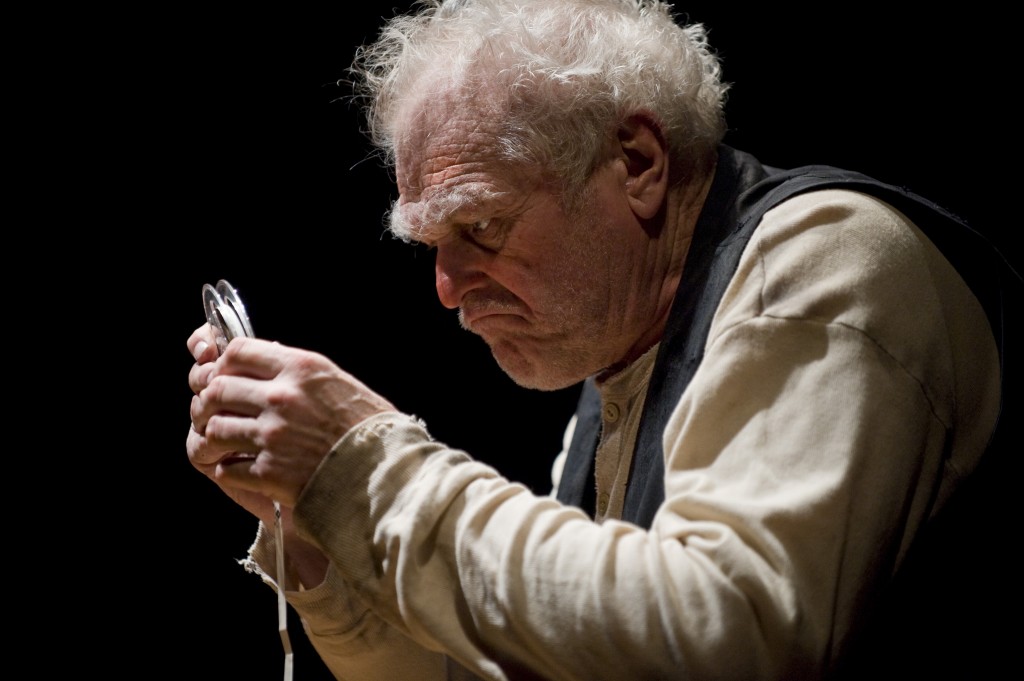
Krapp's Last Tape. Brian Dennehy (at the Goodman). Coming to a Long Wharf near you. Richard Hein photo.
Categories: Uncategorized | 4 Comments

Old Hat? Really?

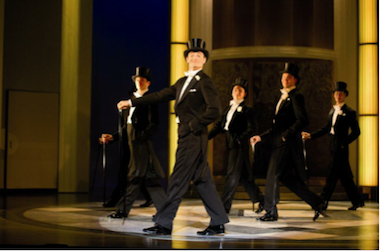
Yes, I want to see this. A British adaptation of the film Top Hat had a successful tour and has now transferred to the West End.


This story, Top Hat! Return to the golden age of the musical:
Forget the recession – moonlight and music and love and romance are back
, in the Sunday, Nov. 27 edition of the England’s The Independent newspaper—had my hat popping off my head in cartoon-like exasperation.

It’s not just the article’s forced “trend” premise—why, in the same month when a new, arch and contemporary musical version of Matilda is being touted as the best and boldest new British musical since Billy Elliot, need anyone make the argument that theaters “want to play safe”?
But several of the shows cited here as “classic” are in fact new to the live stage. They reflect modern theater practices as much as they do trad styles. And if using old literary source material for a musical is grounds to dismiss it, well, go get those Spring Awakening guys.
The Wizard of Oz mentioned here is an all-new production produced by Andrew Lloyd Webber and Bill Kenwright, duly based on the MGM musical (including all the accustomed Arlen/Yarburg songs) but with some fresh tunes by Lloyd Webber in a rare reunion with the brilliant lyricist Tim Rice. Directed and co-adapted by Jeremy Sams. Nothing against Wizard of Ozes like the one coming to New Haven’s Shubert later this month (a NETworks-produced tour based on the popular 1987 Royal Shakespeare Company adaptation of the movie), but this—as the guardian of the gates of the Emerald City likes to say—is a horse of a different color.

As for Top Hat, producers have been trying to crack that as a stage vehicle for decades. I remember Tommy Tune mentioning in the mid-‘90s that there’d been a Top Hat in development with him in mind. The sticking point with adapting Fred Astaire/Ginger Rogers musicals, he told me, was not the lack of exquisite dancers available, but that the books of these musicals are rather thin. They also tend, as movies do, to liven themselves up with lots of scene changes, including hard-to-shift locales like parks and Venetian waterways. When I read that there’s a new Top Hat musical on the boards, I’m not thinking “ho hum.” I’m thinkin’ “How?”
Ultimately, the Independent article concedes that what theaters really are looking for is balanced programming: the strapped Opera North company is doing Rodgers & Hammerstein’s Carousel because it “could bring more people to the company.” The artistic director of the Curve theater in Leicester is quoted as saying that without a “quest for something new” that musical theater would “struggle and die.” This caveat seems overblown as applied to the Curve’s impending production of Gypsy, which like Carousel is an ahead-of-its-time nostalgia-driven modern psychomusical which, whenever revived, demands extensive updating and reinterpretation. In any case, Gypsy hasn’t had a major British revival in nearly three decades.

Chide the musical theater, if you like, for underwritten “jukebox musicals” (a genre the British pioneered and still dominate). But canny revivals of well-written shows which are ripe for reconsideration, designed for large venues where, new, untried and intimate works are unlikely to want to tread anyway? Doesn’t faze me in the least, and I count myself at least as progressive and innovation-craving as the blokes at The Independent.

Categories: Uncategorized | Leave a comment

Non Terpsichur


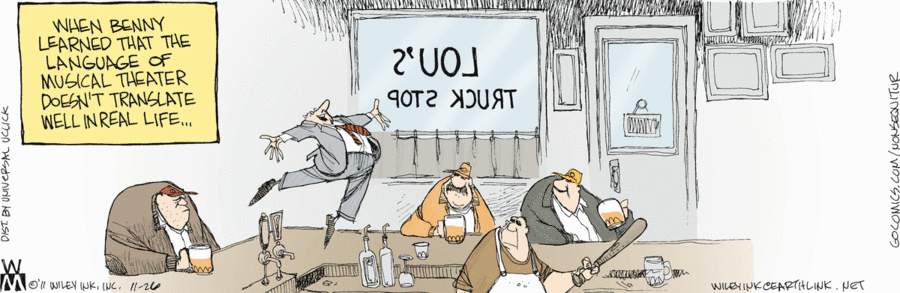
Friday’s edition of the Non Sequitur comic strip. (I get it by subscription via the indispensible gocomics.com).

This is Wiley Miller‘s take on an old joke. The concept was also grist for a memorable Saturday Night Live sketch in November, 1996. (Transcription here.)

The premise of the mockery is that musical theater is an idealized, stylized form of entertainment which exaggerates and distorts reality for artistic purposes that can occasionally be off-putting and disorienting for those who have no imagination or sense of humor.

Not unlike newspaper cartoons and late-night comedy shows.

Categories: Uncategorized | Leave a comment

Theater of Thanks

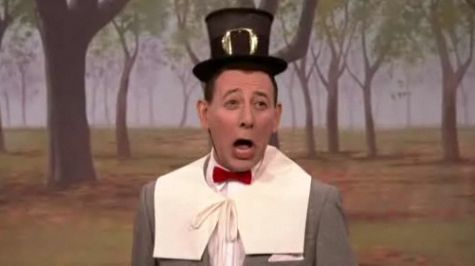
Thanksgiving-themed theater is simply not a bustling subject. Some likely excuses: a lot of theaters are dark over thanksgiving. Christmas plays tend to start touring around thanksgiving. Colleges aren’t in session, so no Thanksgiving plays there either.

Well, I tried…


August: Osage County, Tracy Letts. Not specifically set at Thanksgiving, but a model modern dysfunctional family mealtime mess.


Story of the First Thanksgiving

http://www.kidsinco.com/2008/07/story-of-the-first-thanksgiving/

More of a tableaux vivant than a play, this free online pageant scenario contains less than two dozen sentences, all intoned by a narrator while the story is silently acted out by a flexibly sized aggregation of pilgrims and Native Americans (here labeled “Indians.”)


How I Learned to Drive, Paula Vogel.

L’IL BIT: We missed you at Thanksgiving… I did. I missed you.

PECK: Well, there were… “things” going on. I didn’t want to spoil anyone’s Thanksgiving.

L’IL BIT: Uncle Peck? Please don’t drink anymore tonight.

PECK: I’m not… overdoing it.

L’IL BIT: Why do you drink so much?

PECK: Well, L’il Bit—let me explain it this way. There are some people who have a… a “fire” in the belly. I think they go to work on Wall Street or they run for office. And then there are people who have a “fire” in their heads—and they become writers or scientists or historians. You. You’ve got a “fire” in the head. And then there are people like me.

L’IL BIT: Where do you have… a fire?

PECK: I have a fire in my heart. And sometimes the drinking helps.


The Happy Journey to Camden and Trenton by Thornton Wilder. They’re going on a Christmas trip, right? But it’s just as Thanksgivingsy.


The Thanksgiving Visitor by Truman Capote. Originally a short story, later adapted for the stage by Chicago’s Provision Theater, for a double bill with A Christmas Memory.

Categories: Uncategorized | Leave a comment

Puppet Culture

Was I inspired to rush out and see the Muppets movie on the day of its release? No, despite my admiration for the troupe’s achievement at keeping an old-fashioned playhouse alive for so many decades.
I was inspired, strangely, to download four dozen episodes of an earlier comedy puppet extravanganza, The Edgar Bergen and Charlie McCarthy Show, from archive.org.
Bergen was a ventriloquist whose voice-throwing was largely confined to the non-visual medium of Old Time Radio. (He did appear in a number of films, in which his ventriloquist skills are not very convincing.)
Bergen and his partner, the top-hatted and monocled dummy Charlie McCarthy, made their final screen appearance in the Muppet’s first movie, The Muppet Movie, in 1979. (Bergen died in the fall of ’78, months before the film was released.)
Bergen owes his showbiz success to Noel Coward, who caught his nightclub act and recommended him for a radio gig on Rudy Vallee’s Royal Gelatin Hour in 1936.
The Bergen/McCarthy show was a top-rated radio comedy show for years. It helped regular guest W.C. Fields gain some commercial cachet and was in part responsible for Orson Welles’ Mercury Theatre War of the Worlds panic, since many switched over to that program late because they were listening to the end of the McCarthy show.

Oh. the Muppets are cool too.

Categories: Uncategorized | Leave a comment

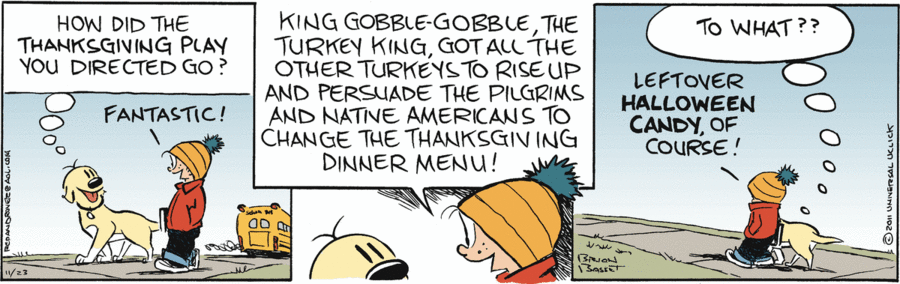
Red and Rover Stage Jacobean Turkey Tragedy


As the father of a couple of present-day elementary schoolers, I can attest that the holiday-themed school play—an entertainment staple of my own 1960s childhood, and popular comic fodder for Peanuts well into the 1980s—has gone the way of vaudeville and temperance lectures. There just isn’t an audience for the genre anymore. When both parents have full-time jobs, no one can make the matinees.
So kudos to Red & Rover (wrought by Brian “Adam@Home” Bassett and Rob “Big Top” Harrell, and found on the invaluable gocomics.com) for persisting in an old joke scenario which has about as much relevance as if the boy and dog were stranded on a desert island. They’re my favorite theater revivalists of today.

Categories: Uncategorized | Leave a comment

Josh Borenstein Manages

Well, that was easy. The new Managing Director of the Long Wharf Theatre is the guy who’s been doing the job for the last six months.

When Josh Borenstein assumed the title of Interim Managing Director at the theater this spring—in the wake of Ray Cullom’s sudden departure and just as the 2010-2011 season was ending—it was under the auspices of AMS Planning and Research Corp. Borenstein was still working for AMS, a company that studies the marketability and sustainability of arts organizations, when Long Wharf subcontracted his services to help them sustain their theater directly.

At that time, the search for a new Managing Director hadn’t yet begun, and no names were mentioned as being on a short list. A national search eventually did happen, under new Long Wharf board chair Charles Kingsley, and Borenstein must have made quite an impression.

Borenstein served Long Wharf previously as Associate Managing Director (under Michael Stotts and then Joan Channick)  from 2003-2008. He knows how to roll with changes at the theater. He was around when the big talk was about Long Wharf (the theater) leaving Long Wharf (the wharf) and moving downtown. Then he was around this year, when that plan was wisely scuttled and the theater decided to renew its lease longterm and make extensive renovations to its auditorium.

Josh Borenstein brings a rare and extremely describable combination to the Long Wharf: youth and experience. He attended the Yale School of Drama, so he was travelling in New Haven theater circles (and studying with some of the great theater management minds) before his first stint at Long Wharf. But he’s also of a generation that’s having to rethink how theaters are run.

The future looks bright. The Long Wharf board must be happy that the selection process for a new Managing Director went so smoothly, and the other Long Wharf administrators must be thriller that there’s no difficult transition to effect; Borenstein’s already on board.

Now let’s hear about those renovation plans!

Categories: Uncategorized | Leave a comment

New Haven Advocate Archives Resurgens!

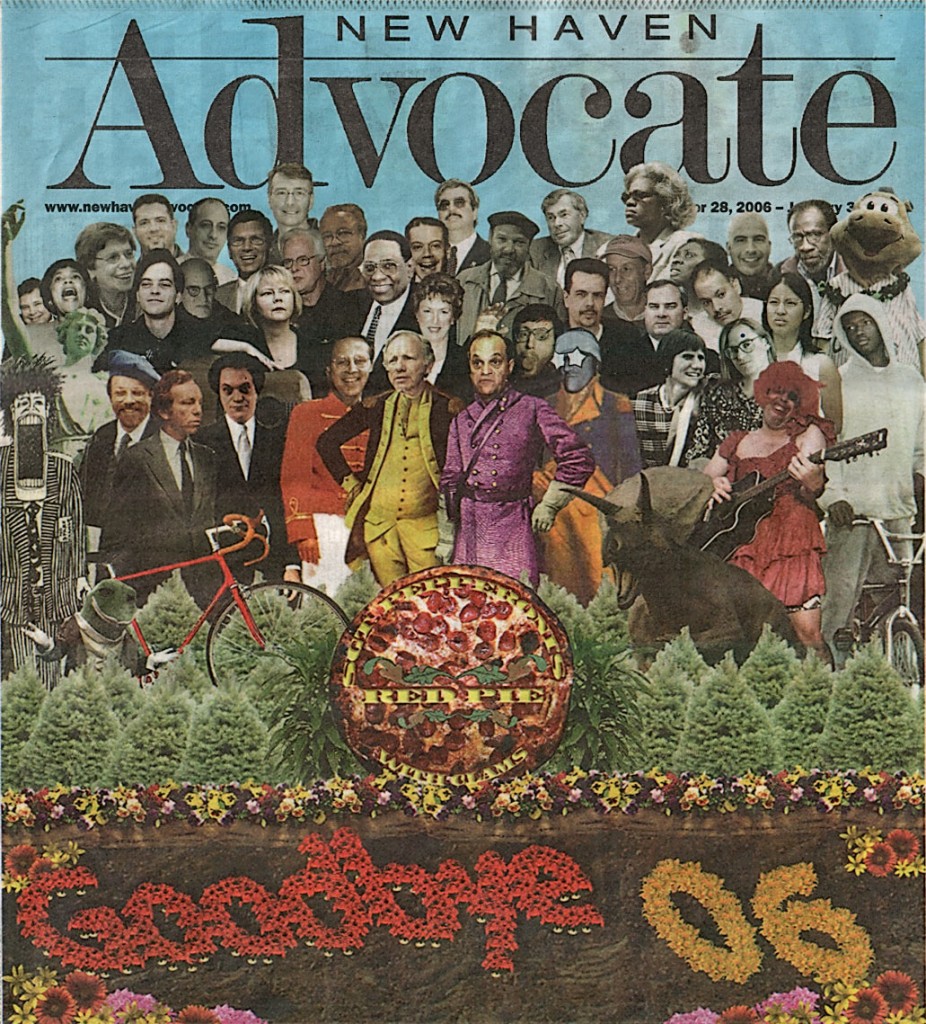
See if you can find August Wilson in this year-in-review New Haven Advocate cover from 2006.

I’m pleased to note that the New Haven Advocate—the Connecticut alt-weekly for which I worked full-time from 1991-2008, and for which I wrote a weekly theater column for nearly 20 years—has reactivated the “Archives” section of its website.
The archives had been disabled for months, and I wasn’t sure they were ever coming back.
Literally millions of words written by me are contained in those archives, and I frequently get requests for old reviews and features.

They’re here.

Most of ‘em anyway. Along with fine work by esteemed former colleagues. Dig in.

Categories: Uncategorized | Leave a comment